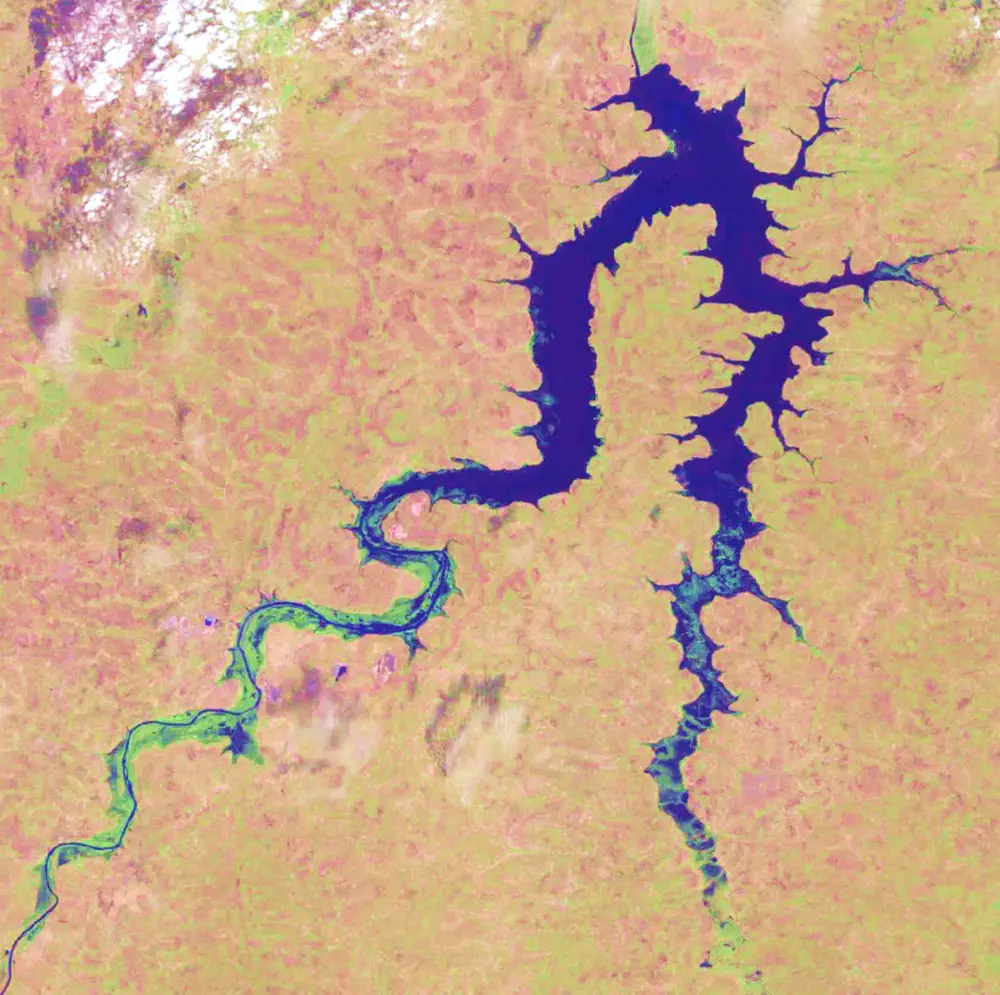
Scientists have long understood that rivers and lakes influence one another, but actually observing where one system gradually transitions into the other has remained a challenge — until now.
A new study led by researchers in the department of Geography and Geographic Information Science, including professor Jida Wang and postdoctoral researcher Xinchen He, and professor Bruce Rhoads, in collaboration with researchers from multiple institutions, is exploring these long theorized processes.
The work builds on a broader NASA-funded project led by Wang, who serves as the department’s principal investigator, using data from NASA’s Surface Water and Ocean Topography (SWOT) mission to directly observe how rivers and lakes interact over large distances and under changing conditions. The research introduces the concept of the lake-river continuum (LARIC) and, for the first time, demonstrates how satellite observations can track these dynamic transition zones in real-world systems.
Learn more about what this study reveals about these important transition zones