From hundreds of kilometers above Earth’s surface, satellites can detect movements measured in mere millimeters. For geophysicist Lin Shen, those seemingly tiny changes can reveal much bigger stories about earthquakes,...
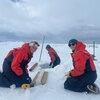
For four or five days, the research vessel barely moved.Locked in Antarctic sea ice, the ship crept forward only about 100 yards a day as researchers waited for conditions to improve. For many aboard, the delay was frustrating. But for Rose Malanga and her advisor, professor ...
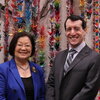
Long before he helped draft federal hazard mitigation legislation in the U.S. Senate, Robby Goldman (PhD, Geology, ‘23) was learning a different lesson as a graduate student: understanding complex problems starts with listening.When Goldman...
Taking apart a watch and reassembling it is one thing. Rebuilding an entire river landscape from scratch is another.A collaboration among researchers across the United States and China is offering scientists a new way to understand how river landscapes form — not only on Earth, but also on worlds...
The Cancer Center at Illinois (CCIL) has more than 125 members from across the Illinois campus, including the Ralph E. Grim Professor in Earth Science & Environmental Change, ...
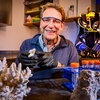
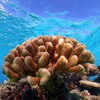
In April 2019, a marine heat wave struck a coral reef on the island of Moorea in French Polynesia, killing much of the coral and the beneficial algae that colonized it. This “bleaching” event reduced live coral populations on the reef from about 75% beforehand to less than 17% a year later and led...
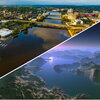
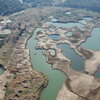
A new study using multidecade satellite imagery and face-to-face human interviews tracked the environmental and societal impacts of gravel mining in the Lubha River, Northeast Bangladesh. The researchers found that the river had recovered its natural shape within just four years after gravel mining...
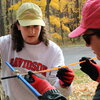
Geology can take many forms, from the study of rocks and minerals to the living records preserved in trees. At Homer Lake Forest Preserve, graduate students from the ...
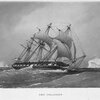
The voyage of the HMS Challenger in the 1870s was a sprawling 3-1/2-year expedition to explore the world’s oceans. The scientists aboard the vessel collected 100,000 specimens of sea creatures, discovered 5,000 new species, mapped the ocean floors and took hundreds of measurements of sea...